

🇺🇲 Analysis - Innovation Is Not Enough: Securing the Path from Discovery to Operational Advantage
Dr. Angel A. Diaz, Senior Fellow, MSI²

Executive Summary
The United States remains one of the most innovative nations in the world, with unmatched research institutions, national laboratories, defense organizations, universities, and private-sector technology companies. Yet invention alone does not guarantee strategic advantage. In an era of accelerating great power competition, adversaries do not need to out-invent the United States in every domain. They can observe, collect, steal, adapt, counter, and exploit emerging technologies before those technologies are fully protected, transitioned, integrated, and fielded.
The challenge before government and industry is no longer simply how to discover the next breakthrough. The more urgent question is how to secure the path from discovery to operational advantage. That path requires disciplined technology transition, research security, cybersecurity, supply chain awareness, acquisition alignment, workforce readiness, and a deliberate connection between innovation and mission outcomes.
During a recent discussion on the future of warfare, I made the point directly: “Innovation is not enough. The real question is how fast we can protect, transition, integrate, and operationalize technology before an adversary exploits or counters it.”
For national security organizations, this is the central challenge of the next decade: protecting American innovation while accelerating its movement into operational use.
Introduction: The Innovation Trap
America has long viewed innovation as one of its greatest strategic advantages. From advanced research and development to military modernization, artificial intelligence, autonomy, space systems, cyber capabilities, biotechnology, quantum science, and advanced manufacturing, the United States continues to generate extraordinary ideas and technologies.
Innovation, by itself, is not enough; a discovery does not become an advantage until it is secured, matured, transitioned, integrated, adopted, and sustained in the operational environment. A prototype does not deter an adversary. A promising research effort does not create overmatch unless it moves through the difficult path of program alignment, funding, testing, acquisition, deployment, and user adoption. A breakthrough technology does not remain an advantage if an adversary can observe it, steal it, compromise it, reverse engineer it, or develop countermeasures before it reaches the warfighter.
This is the innovation trap: believing that discovery alone creates strategic advantage.
In reality, strategic advantage is created when discovery is converted into a trusted capability at the speed of competition. For the Department of Defense, the Intelligence Community, the Department of Energy, and other federal agencies operating in high-consequence environments, the challenge is not simply to innovate. The challenge is to secure and operationalize innovation before it is exploited.
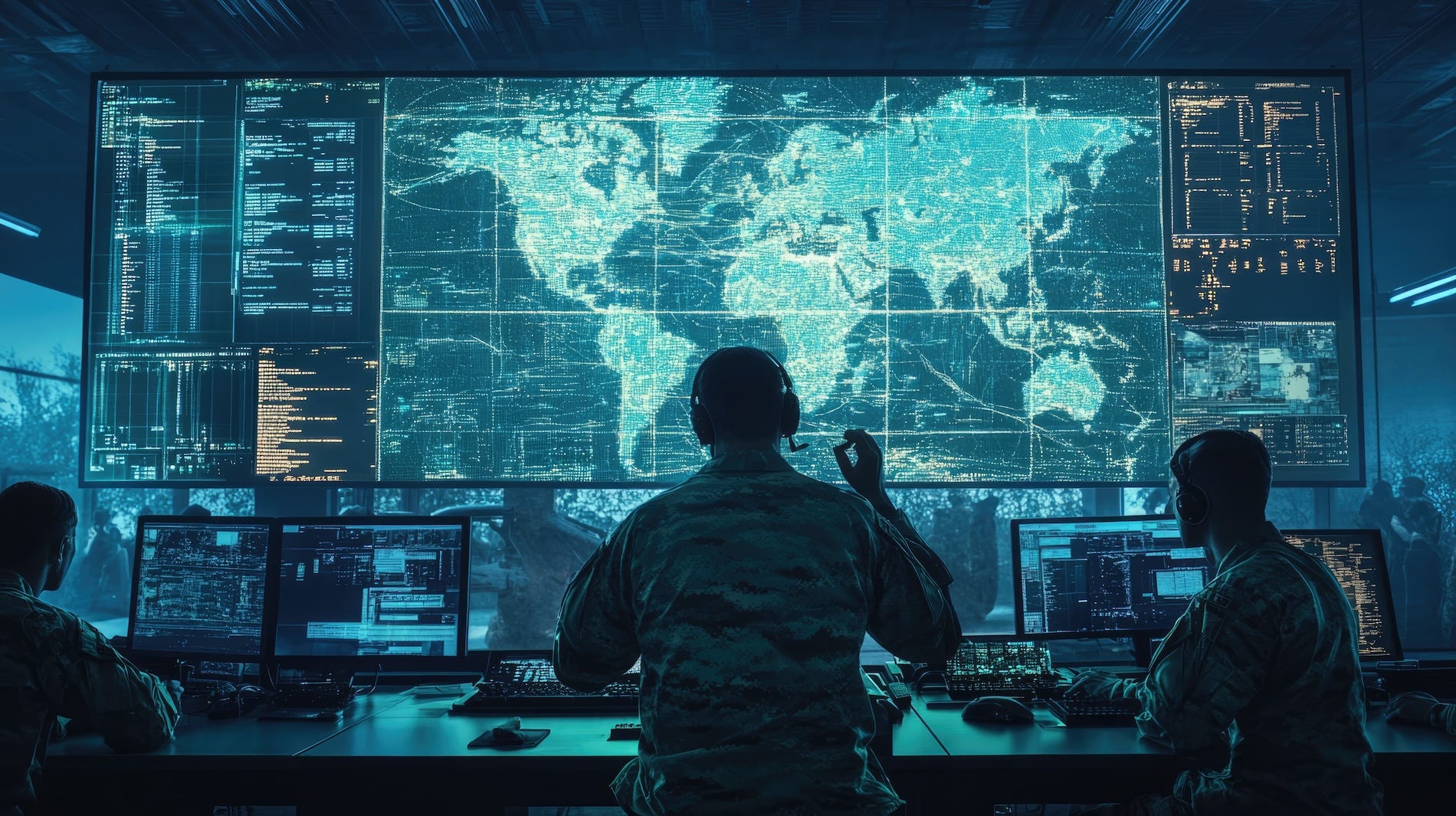
Adversaries Do Not Need to Out-Invent Us to Outmaneuver Us
Strategic competitors understand the strength of the American innovation ecosystem. They study our research institutions, monitor our public investments, analyze our academic publications, target our supply chains, exploit cyber vulnerabilities, recruit talent, collect open-source intelligence, and conduct espionage against government, industry, and academia.
Their objective is not always to create the original breakthrough. In many cases, the objective is to shorten their own development cycle by exploiting ours.
This distinction matters. The United States may lead in discovery, but adversaries can still compress the advantage window by rapidly absorbing what we reveal, stealing what we fail to protect, and countering what we are too slow to field. Once an adversary understands the direction of our technology development, they can begin designing countermeasures, building parallel capabilities, or shaping doctrine around our delays.
From my perspective, “Our adversaries do not need to out-invent us in every domain. They can observe what we are building, steal what they can, adapt quickly, and develop countermeasures before we ever field the capability.”
This dynamic is visible across multiple technology domains. Artificial intelligence and machine learning are being used to accelerate intelligence analysis, targeting, cyber operations, autonomous systems, logistics, and decision support. Quantum technologies carry implications for sensing, communications, encryption, and computing. Hypersonic systems challenge legacy assumptions about warning time, defense, and deterrence. Cyber capabilities continue to blur the line between competition, espionage, disruption, and conflict. Autonomous systems are reshaping the cost equation of modern warfare.
The danger is not only that adversaries are developing these technologies. The greater danger is that they are learning from our innovation ecosystem while we struggle to protect and transition our own discoveries quickly enough.
The Gap Between Discovery and Operational Advantage
The United States is exceptional at generating ideas. It is less consistent at moving those ideas into operational advantage.
Too often, promising technologies stall between the laboratory and the field. They become trapped in the seams between research and development, requirements generation, acquisition strategy, funding cycles, test and evaluation, cybersecurity approval, user adoption, and sustainment. The result is a persistent gap between what American scientists, engineers, and innovators can create and what national security organizations can actually deploy at scale.
This transition gap is not merely bureaucratic. It is strategic.
Every delay creates time and space for adversaries to observe, exploit, and respond. Every unprotected research environment creates an opportunity for theft or compromise. Every disconnected program office, unclear requirement, or underdeveloped transition plan increases the risk that a promising technology will never become a fielded capability. Every workforce gap slows adoption. Every cybersecurity or supply chain weakness creates exposure.
As I have stated in discussions on this topic, “The gap is not always invention. In many cases, the gap is transition, procurement, integration, and operational adoption.”
This insight should shape how agencies and industry partners think about technology development. The question is not only whether a capability is technically promising. The question is whether it has a realistic path to mission impact.
That path must account for the operational user, the acquisition environment, the data architecture, the security model, the workforce, the integration burden, the sustainment plan, and the adversary’s ability to learn and adapt.
Security Must Be Built into the Innovation Lifecycle
Security cannot be treated as an afterthought. In the current threat environment, protection must be part of the innovation lifecycle from the beginning.
This includes cybersecurity, research security, supply chain risk management, counterintelligence awareness, controlled unclassified information protection, classified information discipline, data governance, intellectual property protection, and compliance with evolving security requirements such as CMMC. It also includes a cultural shift. Scientists, engineers, program managers, contractors, universities, laboratories, and industry partners must understand that innovation environments are also collection environments.
Adversaries do not wait until a system is fielded to begin studying it. They collect throughout the lifecycle. Early-stage research, conference presentations, technical papers, grant activity, SBIR/STTR efforts, prototype demonstrations, subcontractor ecosystems, and workforce movement can all create signals that adversaries exploit.
That does not mean the United States should stop collaborating, publishing, or partnering. Openness remains one of the great strengths of the American innovation ecosystem. But openness must be balanced with discipline. The nation must become better at distinguishing between what should be shared, what should be protected, and when protection must increase as a technology moves closer to mission relevance.
Put plainly, “If security is treated as something that happens after innovation, then we have already created space for exploitation.”
This is especially important as emerging technologies become more software-defined, data-dependent, networked, and dual-use. The same technologies that can transform military and government operations can also be studied, adapted, or weaponized by competitors. Therefore, securing innovation requires more than compliance. It requires strategic awareness.
Moving at the Speed of Strategic Competition
The United States does not lack talent, ideas, or ambition. What it often lacks is speed across the full pathway from discovery to deployment.
Moving faster does not mean abandoning rigor. It means reducing unnecessary friction, aligning stakeholders earlier, designing transition pathways sooner, and building security and operational adoption into the development process from the start. It means bringing program managers, acquisition professionals, technologists, security experts, users, and mission owners together before a promising technology becomes stranded.
This requires a different model of collaboration between government and industry.
Government agencies need partners who understand the mission environment, the science and technology ecosystem, the acquisition process, the security requirements, and the operational realities of implementation. Industry partners must do more than provide technical labor. They must help agencies translate ideas into executable programs, develop transition strategies, assess risk, align stakeholders, manage complexity, and prepare the workforce to adopt new capabilities.
The future of strategic competition will reward organizations that can integrate across disciplines. Technical excellence alone will not be enough. Program management alone will not be enough. Security alone will not be enough. Workforce development alone will not be enough. The advantage will come from combining these elements into a cohesive system that moves technology from concept to capability with urgency and discipline.
Conclusion: Advantage Must Be Engineered, Protected, and Delivered
The United States cannot assume that innovation will automatically translate into advantage. In today’s strategic environment, advantage must be engineered. It must be protected. It must be transitioned. It must be integrated. It must be adopted by the people and organizations responsible for executing the mission.
Adversaries are watching the American innovation ecosystem closely. They are studying our investments, exploiting our openness, targeting our intellectual property, and developing countermeasures to technologies we have not yet fully fielded. This reality demands a more deliberate approach to securing the path from discovery to operational advantage.
The nation must continue to innovate, but it must also move faster and protect better. It must treat transition as a strategic discipline, not an administrative phase. It must bring security into the lifecycle early. It must prepare the workforce to absorb new capabilities. It must connect research, acquisition, implementation, and mission outcomes.
The future will not be decided by invention alone. It will be decided by the organizations that can secure innovation, accelerate transition, and deliver operational advantage before adversaries can exploit the gap; “the real race is not simply who discovers the next technology. It is who can secure it, move it, and turn it into operational advantage before the other side neutralizes it.”
Three Key Takeaways
1. Innovation alone does not create a strategic advantage
Scientific breakthroughs only matter if they are secured, transitioned, integrated, and operationalized before adversaries can exploit or counter them. The real competition is not simply over discovery, but over speed to trusted operational capability.
2. Adversaries do not need to out-invent the United States to outmaneuver it
Strategic competitors increasingly rely on espionage, cyber operations, supply chain vulnerabilities, open-source intelligence, and technology acquisition strategies to compress America’s advantage window and accelerate their own development cycles.
3. Security must be embedded into the innovation lifecycle from the beginning
Cybersecurity, research protection, counterintelligence awareness, supply chain resilience, and operational adoption cannot be afterthoughts. Strategic advantage depends on integrating security, acquisition, workforce readiness, and implementation into a single disciplined process.
Footnote: Readers interested in the strategic dimensions of technological superiority, state-directed acquisition, espionage, and innovation security may follow Dr. Angel A. Diaz’s forthcoming book, The Vanishing Edge: Espionage, Innovation, and the Battle for Power, to be published by Bravo Zulu Publishers and MSI².
Author
Dr. Angel A. Diaz is a Defense and Intelligence executive. A U.S. Navy veteran with more than two decades of experience in defense innovation, he has advised DHS, the FBI, and other national security entities on cloud computing, data analytics, artificial intelligence, and next-generation weapon systems. Dr. Diaz holds a Doctor of Education in Executive Leadership from The George Washington University, along with an MBA, an M.S. in Management Information Systems, and a B.S. in Computer Studies. His career bridges military service, advanced research, and organizational leadership, positioning him as a trusted authority on cybersecurity, emerging technologies, and mission-focused transformation. Guided by a commitment to public service and organizational excellence, Dr. Diaz continues to shape strategic initiatives that enhance national security and technological resilience.
The opinions expressed in this article are those of the author and do not necessarily reflect the views of the Miami Strategic Intelligence Institute (MSI²).
Awesome, Dr. Diaz
Thanks for sharing your perspectives on this topic.