

🇺🇲 Commentary - Will the Silent Majority Finally Frown?
Andrés Alburquerque, Senior Fellow, MSI²

Executive Summary
A growing segment of Americans increasingly perceives itself as economically burdened, culturally dismissed, and politically marginalized despite sustaining much of the country’s economic and social stability. Concerns over taxation, immigration, public safety, institutional trust, and cultural fragmentation have intensified frustrations among many working and middle-class citizens. The long-term challenge may not be polarization alone, but the erosion of legitimacy when large portions of the population no longer feel represented or respected within the political system.
Introduction
Political legitimacy depends not only on elections, but on whether citizens believe institutions still reflect their interests, values, and priorities. Growing frustration among working and middle-class Americans has fueled concerns over taxation, cultural change, political representation, and institutional trust. As these tensions deepen, questions emerge about how long a politically disengaged majority can remain silent.
The Silent Majority: Taxed Into Submission, Governed Into Silence
There is a class of citizens in America that the media never celebrates, the universities never study with admiration, and the political establishment only remembers when quarterly tax payments are due. They are not glamorous. They do not riot in the streets. They do not glue themselves to highways, loot pharmacies, burn flags, or scream into megaphones about invented oppressions. They wake up before sunrise, fight traffic, work overtime, pay mortgages, raise children, and quietly keep the entire machine running. They/we are the silent majority.
And increasingly, they are governed like conquered people in their own country, where the modern political order survives by extracting wealth, stability, and obedience from productive citizens while transferring power to loud, organized activist minorities who contribute little to the functioning of society but wield disproportionate influence over it. The average taxpayer finances the very ideological apparatus that despises him/us.
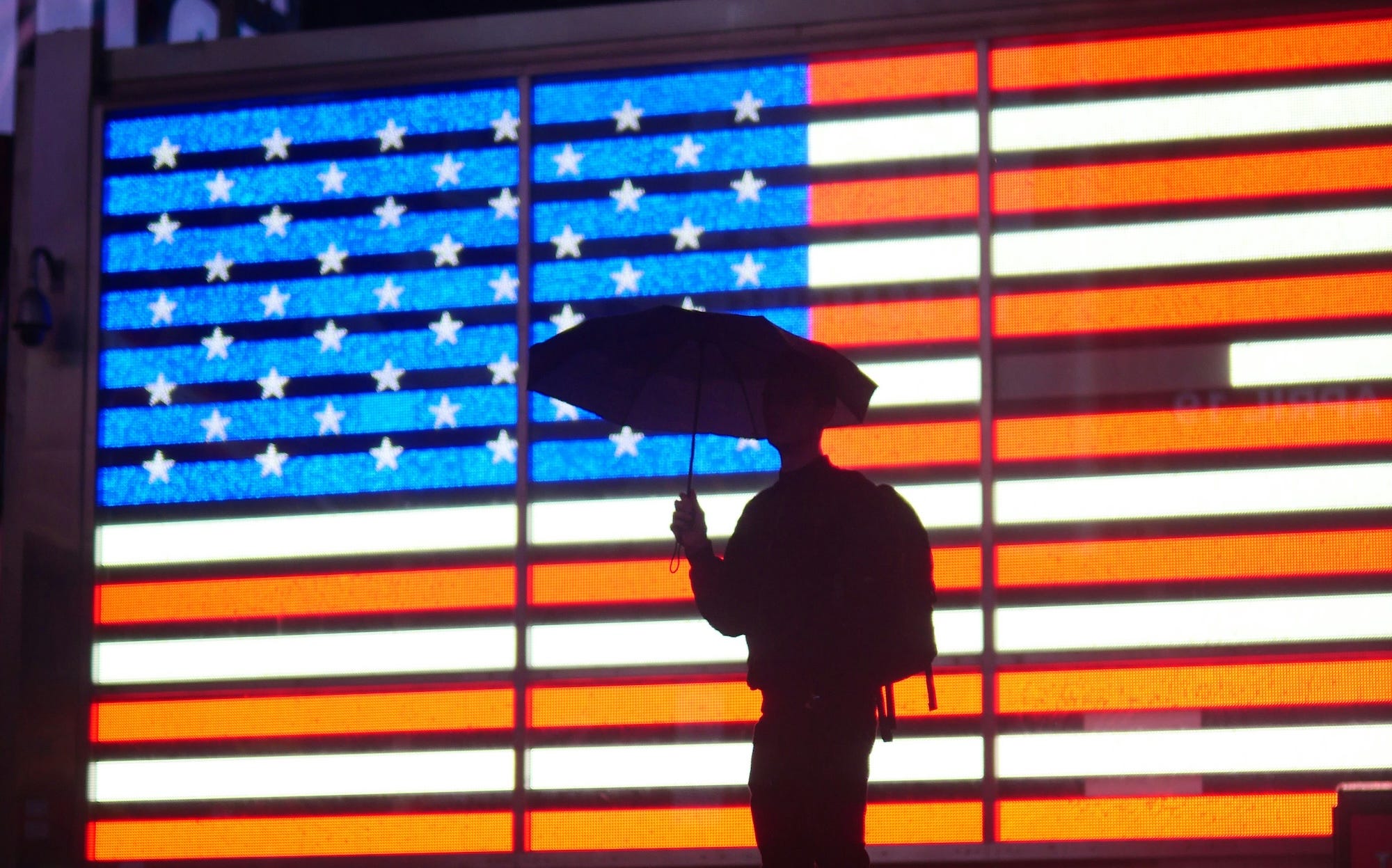
From taxpayers to political outsiders
The construction worker in Florida pays taxes so that bureaucrats in Washington can subsidize NGOs that lobby for policies he opposes. The small business owner funds universities that teach his children to hate the civilization that gave them prosperity. The truck driver pays for public institutions that increasingly treat his values as primitive relics, even bigotry, requiring correction. And then, after paying for all of it, he is told his vote is illegitimate. That their vote was a mistake.
That is the central obscenity of modern Western politics: the productive majority is expected to finance its own disenfranchisement. The left has mastered a simple but devastating political formula. First, redefine democracy not as majority rule under constitutional order, but as permanent moral authority for self-appointed activist classes. Then weaponize institutions (media, academia, courts, bureaucracies, and corporate HR departments) to ensure that any expression of majority opinion can be dismissed as “dangerous,” “misinformed,” or “extremist.” The result is a “democracy” where elections are permitted, but majorities are not allowed to govern.
When ordinary citizens object to mass immigration, they are called xenophobes. When they object to crime, they are accused of racial animus. When they defend national identity, they are smeared as authoritarians. When they reject ideological indoctrination in schools, they are labeled threats to democracy.
Notice the pattern: the majority’s concerns are never debated honestly. They are pathologized. Meanwhile, tiny but highly organized activist factions receive endless institutional protection. Every grievance, no matter how fringe, becomes a national emergency requiring taxpayer funding, corporate compliance, media amplification, and legal enforcement. This is not organic social evolution. It is managerial coercion masquerading as compassion.
The silent majority still believes in concepts that once formed the backbone of civilization: work, duty, borders, merit, family, law, accountability, and patriotism. The ruling class increasingly treats these values as embarrassing obstacles to a new ideological order built around identity politics, bureaucratic dependency, and perpetual social fragmentation.
And fragmentation is the point.
A united working and middle class is dangerous to entrenched elites. But a population divided into competing grievance groups becomes manageable. Citizens stop seeing themselves as members of a nation and begin seeing themselves as demographic blocs competing for state-sanctioned privileges.
The left calls this “equity.” In reality, it is political tribalism financed through taxation. The cruel irony is that the silent majority remains astonishingly patient. They ask for little. They do not demand special treatment. They/we do not seek ideological domination. They simply want safe neighborhoods, functioning schools, affordable living, secure borders, and the freedom to raise families without constant cultural sabotage.
Yet every year they are pushed further aside by a coalition of bureaucrats, activists, media operatives, and corporate opportunists; the Cabal who speaks endlessly about “democracy” while systematically insulating themselves from democratic accountability. The people who actually built the country are treated as suspects. The people who destabilize it are treated as moral authorities. And still the silent majority works, pays, and endures.
The crisis of legitimacy
But history contains a warning for ruling classes that mistake patience for surrender. A society can survive economic hardship. It can survive political corruption. It can even survive incompetence for a remarkably long time. What it cannot survive indefinitely is the destruction of legitimacy. Once ordinary citizens conclude that the system no longer represents them, protects them, or even respects them, the civic bond begins to fracture. The real danger to the republic is not the frustrated taxpayers. It is the elite class that continues provoking them while pretending they do not exist.
Because the silent majority is only silent until the day it decides it has nothing left to lose. And frowns!
Conclusion
Political systems endure when citizens believe institutions remain accountable, representative, and responsive. Persistent perceptions of exclusion, cultural displacement, or unequal political influence can deepen social fractures over time. Whether today’s frustrations lead to renewed civic engagement or greater political polarization may shape the future stability of American democratic institutions.
Author
Andrés Alburquerque is a Cuban-born political analyst, university professor, and media personality recognized for his outspoken defense of democratic values and his criticism of authoritarianism in Latin America. Born in Havana in 1956 to a Communist family, he witnessed early on the disillusionment that followed the Cuban Revolution, a turning point that shaped his lifelong commitment to political truth and civic freedom.
Forced into exile, Alburquerque lived across Europe and Latin America, including Italy, the Dominican Republic, and Mexico, before establishing permanent residence in the United States in 2007. Since then, he has remained active in Republican political circles, known for his independent views and willingness to challenge ideological complacency within his own ranks.
He is the author of Diez cuentos cubanos más o menos, a literary work reflecting his cultural roots and critical perspective on Cuban society. Alburquerque also hosts Enfoque Ciudadano on YouTube, a program focused on the political and social challenges confronting American democracy amid growing ideological polarization.
His expertise and personal experience have made him a frequent guest on radio and television programs in Miami, where he provides commentary on Cuba, human rights, democracy, and regional politics.
The opinions expressed in this article are those of the author and do not necessarily reflect the views of the Miami Strategic Intelligence Institute.