

🇺🇲 Strategic Intelligence Report - Geometry of Escalation: Strategic, Operational, Tactical, and Multidomain Factors in the U.S.–Israel–Iran Crisis
CDR José Adán Gutiérrez, U.S. Navy (Ret.), Senior Fellow, MSI² - Rear Admiral (Ret.) Leonardo Quijarro Santibáñez, Senior Fellow, MSI² - Dr. Rafael Marrero, Chief Economist and Founder, MSI²

Summary
The current confrontation in the Middle East is often described as a bilateral competition between the United States and Iran. That framing is incomplete. The geometry of escalation is triangular.
The United States seeks a durable arrangement that goes beyond uranium enrichment and includes missile capability and regional destabilization. Iran insists that its missile forces remain outside the negotiation framework and emphasizes its sovereign rights to nuclear enrichment. Israel maintains a strategic doctrine that reserves the option of preventive action against threats perceived as existential.
Simultaneously, the U.S. force posture emphasizes carrier-based aviation, long-range strike flexibility, missile defense, and integrated multidomain operations. Iran emphasizes deterrence through missiles, maritime disruption, and asymmetric retaliation. Gulf host nations publicly adopt a posture of caution regarding the offensive use of their bases. Russia and China expand the risk perimeter through indirect influence rather than open intervention.
This study analyzes the geometry of escalation through strategic, operational, tactical, and multidomain dimensions; integrates the theory of negotiated coercion; evaluates the architecture of carrier strike groups and Iranian retaliation doctrine; examines Israel’s independent decision-making calculus; and models economic consequences centered on the Strait of Hormuz. The conclusion identifies possible centers of gravity and assesses that the most probable trajectory is sustained coercive pressure, with a real but contained risk of escalation.
I. The Crisis as Geometry
Escalation in modern interstate frictions rarely unfolds linearly. It exhibits geometric dynamics.
Political objectives, military posture, technological capability, alliance policy, and economic interdependence interact simultaneously.
The United States and Iran do not negotiate from opposite ends of the same agreement. They define different agreements. This structural misalignment generates friction even before military confrontation begins.
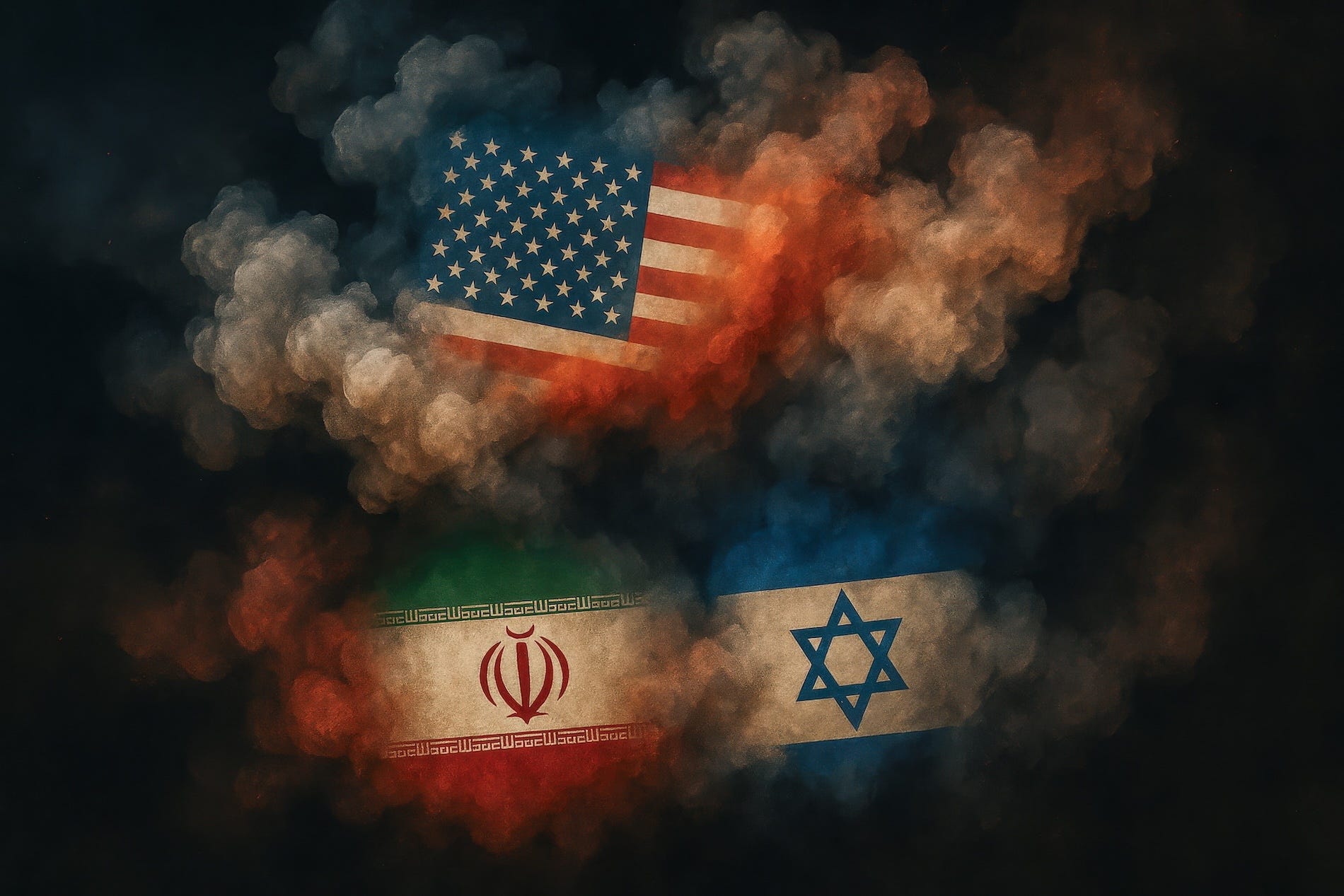
When Israel is incorporated into the equation, the structure changes further. Escalation ceases to be a bilateral negotiation and becomes a triangular interaction among three actors with overlapping but distinct strategic timelines.
The theory of coercive diplomacy suggests that the risk of escalation increases when:
The scope of negotiation is asymmetric
The doctrine of retaliation is publicly declared
Military signaling advances faster than the diplomatic sequence
All three conditions are present.
II. Strategic Level: Three Poles
United States
The United States seeks to restore deterrence, ensure nuclear transparency, impose missile restrictions, and avoid regime change or a prolonged ground war.
The 2026 National Defense Strategy emphasizes restoring peace through strength and sustaining deterrence through denial across operational theaters, prioritizing the protection of the homeland and U.S. interests, including those of the Western Hemisphere (U.S. Department of Defense, 2026). The strategy underscores that credible deterrence is not based solely on punishment but on convincing the adversary that its objectives cannot be achieved at an acceptable cost.
The objective is coercive adjustment, not occupation.
Iran
Iran seeks regime survival, preservation of its missile deterrence capability, maintenance of its enrichment rights, and demonstration of credible retaliatory capacity.
The Department of Defense’s assessment of Iranian military capabilities highlights Iran’s reliance on ballistic missiles, unmanned systems, and asymmetric naval forces (U.S. Department of Defense, 2023). According to some information circulating in open sources, Iran’s greatest threat derives from Khorramshahr-4 hypersonic ballistic missiles, with speeds of up to Mach 16 in flight and Mach 8 during reentry, posing a tremendous challenge for both Israeli and U.S. air defense systems.
Iran does not require battlefield superiority. It requires the ability to impose unacceptable costs.
Israel
Unlike Gulf partners, Israel historically maintains a doctrine that allows preventive or preemptive action against perceived existential threats.
Israeli military planning operates according to threat timelines that may not align with the U.S. diplomatic pace.
If Israel concludes that the strategic window is closing, it may act independently. In that case, the United States could become involved not as initiator but as defender.
III. Alliance Policy and Geographic Constraint
U.S. military power operates within political limits.
Gulf partners traditionally balance defensive cooperation with public caution regarding the offensive use of their territory. The 2026 National Defense Strategy emphasizes that allies must act as capable partners contributing to collective security, not as passive dependents of U.S. force projection (U.S. Department of Defense, 2026).
This posture shifts operational weight toward sea-based aviation and long-range strike systems that do not depend on political permission at the moment of execution.
Israel differs in this respect. It does not depend on regional permission structures to make independent strike decisions. This distinction increases the unpredictability of the escalation sequence.
Geography thus becomes a political constraint translated into operational design.
IV. Operational Architecture: Maritime Redundancy and Layered Defense
Carrier Strike Groups
A U.S. carrier strike group consists of:
Nuclear-powered aircraft carrier
Carrier air wing
Aegis-equipped destroyers and cruisers
Integrated submarine support
Logistical sustainment assets
Carrier air wings include strike fighters, early warning aircraft, electronic warfare platforms, and rotary-wing support (U.S. Navy, 2023).
Operationally, carriers enable sustained air operations in international waters, reducing dependence on politically sensitive bases.
Current Force Posture
Open sources and press reports indicate the deployment or positioning of three strike groups in the region:
USS Gerald R. Ford Carrier Strike Group
USS Abraham Lincoln Carrier Strike Group
USS George H. W. Bush Carrier Strike Group
Additional Strike Capabilities
Beyond carriers:
Long-range bombers (B-2, B-1B, B-52)
Tomahawk cruise missiles launched from submarines
Aerial refueling tankers
ISR platforms
Space-based early warning
Cyber forces
Electronic warfare assets
F-15E Strike Eagle fighter-bombers
(U.S. Air Force, 2022; U.S. Space Force, 2023)
Missile Defense
Layered defense systems, including Patriot and THAAD, protect regional installations (U.S. Army, 2022).
Given that Iranian missile doctrine declares retaliation against regional bases, base survivability forms an integral part of operational planning (U.S. Department of Defense, 2023).
The combination of offensive posture and defensive reinforcement indicates preparation for a contested exchange, not mere symbolic signaling.
V. Multidomain Integration
Modern conflict cannot be understood solely in land, sea, and air terms. Joint doctrine recognizes five domains: land, sea, air, space, and cyberspace (Joint Chiefs of Staff, 2020).
Space
Space-based ISR provides early warning, targeting, navigation, and secure communications. U.S. Space Force doctrine emphasizes space superiority as the foundation of joint effectiveness (U.S. Space Force, 2023).
Cyber
The Department of Defense cyber strategy emphasizes defending the nation, strengthening alliances, and operating in and through cyberspace to shape adversary behavior and degrade hostile command-and-control functions (U.S. Department of Defense, 2023c).
Electronic Warfare
Control of the electromagnetic spectrum is essential for suppression of air defenses (U.S. Navy, 2023).
In this domain, combined with the space domain, it becomes possible not only to sever links between command posts and defense systems but, in modern warfare, even to nullify the ability of ground forces to “see” adversaries, affecting multidomain situational awareness.
Unmanned Systems
Unmanned systems provide persistent ISR and strike capability with reduced risk to personnel (CSIS, 2022).
A confrontation in this theater would occur simultaneously across kinetic and non-kinetic domains. Modern warfare is incorporating unmanned systems in air, land, surface maritime, and underwater dimensions. This is complemented by the integration of AI in battlefield processing; today, we can speak of autonomous weapons systems when considering kinetic effects.
VI. Tactical Sequence and the Israeli Variable
In a scenario of a limited attack initiated by the United States:
Phase one: Precision strikes from carrier aviation, long-range bombers, and submarine-launched cruise missiles aimed at neutralizing command-and-control systems, antennas, and air defense. At this stage, stealth and the low observability of embarked F-35Bs and B-2 bombers will be decisive.
Phase two: Iranian retaliation through ballistic missiles, drones, cruise missiles, and maritime disruption. Massive employment of these means, primarily against naval forces and land bases.
Phase three: Massive precision munition strikes from land bases and carrier aviation. Extensive employment of F-15E aircraft based in the Middle East and carrier-based F-18 Super Hornets.
Phase four: Crisis management and suppression cycles.
If Israel initiates a unilateral attack, the sequence changes.
Iran would almost certainly retaliate against Israeli targets. The probability of Iranian attacks against U.S. bases would increase significantly, regardless of Washington’s initial participation.
Escalation thresholds, therefore, also depend on Israeli calculations.
VII. Iranian Cost-Imposition Doctrine
Iranian military posture emphasizes:
• Regional-range ballistic missile inventory
• Naval mines and fast boats
• Armed unmanned systems
• Exploitation of maritime chokepoints
The Strait of Hormuz carries approximately one-quarter of global seaborne oil trade and nearly one-fifth of global consumption (U.S. Energy Information Administration, 2025a). Approximately one-fifth of global LNG trade transits the same corridor (U.S. Energy Information Administration, 2025b).
Iran does not need to close the strait. The perception of instability can alter routes and increase insurance premiums (Congressional Research Service, 2023).
It should also be noted that the primary destination of Iranian crude is China, meaning that disrupting free transit through the strait would work against not only Iran’s own economic interests but also those of one of its strategic partners.
Cost imposition is the strategic objective.
VIII. Russia and China
Russia maintains a strategic partnership with Iran (Kremlin, 2022). China has conducted trilateral naval exercises with Russia and Iran (Ministry of National Defense of the People’s Republic of China, 2023).
Neither power benefits from an uncontrolled regional war. Both benefit from preventing U.S. dominance without direct involvement.
Participation will likely remain indirect.
Major power entry remains low probability but high impact. Likewise, Iranian reactions may affect the global economy by indirectly impacting Russia and China through variations in fuel flows or prices.
IX. Economic Compression
Energy markets are nonlinear systems.
Risk perception in Hormuz can alter routes and increase premiums prior to physical disruption (Congressional Research Service, 2023).
Triangular geometry increases unpredictability.
Economic risk compresses strategic timelines.
X. Probabilistic Trajectory
Most likely outcome: sustained coercive pressure with episodic signaling.
Moderate risk: limited attack followed by contained retaliation and negotiated de-escalation.
High scenario: unilateral Israeli action triggering rapid multivector retaliation and U.S. defensive engagement.
Low probability but high impact: major power involvement following miscalculation.
Geoeconomic Escalation: Markets as an Operational Domain: A Perspective from the Noguerol-Marrero Doctrine
The U.S.–Israel–Iran crisis is often analyzed through force posture, missile defense architectures, and kinetic escalation sequences. However, in the contemporary strategic environment, energy and financial markets are not merely passive recipients of conflict. They are active transmitters of it.
According to the Noguerol-Marrero Doctrine, markets constitute an operational domain. The Strait of Hormuz carries a substantial proportion of liquefied natural gas (U.S. Energy Information Administration, 2025a, 2025b). From a naval perspective, it is a chokepoint. From a geoeconomic perspective, it is a macroeconomic multiplier.
Energy markets exhibit low short-term supply elasticity (International Energy Agency, 2023). This structural characteristic produces a critical strategic consequence: marginal disruption can generate disproportionate price increases. Iran does not need to physically close the strait to produce a systemic impact. It needs only to raise the perception of instability.
Ambiguous maritime harassment, limited mine activity, drone demonstrations, or episodic missile signaling can increase maritime insurance premiums and alter futures curves without crossing clear kinetic thresholds (Congressional Research Service, 2023). In this context, perception becomes an instrument of coercion.
The transmission mechanism is predictable:
Risk perception → Insurance premium → Brent increase → Inflationary pressure → Interest rate persistence → Political constraint
Recent World Bank models estimate that a sustained 30% increase in Brent prices may add between 0.5 and 1.0 percentage points to the consumer price index in advanced economies over two quarters (World Bank, 2023). In politically sensitive environments, that margin becomes strategically decisive.
Carl von Clausewitz defined the center of gravity as the core of power and movement upon which everything depends (Clausewitz, 1976). In modern democracies, that core is often anchored in sustained political will. Energy-induced inflation exerts direct pressure on that core.
Escalation dominance, therefore, is no longer measured solely in sorties generated or missiles intercepted. It is measured in resilience under economic compression.
China’s role reinforces the systemic dimension. As the primary buyer of Iranian crude, Beijing does not benefit from global energy collapse. Yet it does not require absolute stability. Its optimal strategic position lies within a bounded band of instability: sufficient to erode Western cohesion, but insufficient to trigger global recession (Keohane & Nye, 2012).
China influences the geometry of escalation through purchasing patterns, strategic reserve management, and financial signaling rather than direct kinetic intervention.
In triangular crises, systemic actors can shape outcomes without firing a single projectile.
The strategic implication is clear: operational superiority must be accompanied by macroeconomic resilience. Sanctions regimes and financial architecture remain powerful tools (U.S. Department of Defense, 2026), but they operate on longer timelines than energy shocks. Oil markets react in hours; sanctions erode over months.
The actor capable of absorbing energy volatility while preserving internal political cohesion maintains a strategic advantage.
Under the Noguerol-Marrero Doctrine, the economy is not a peripheral element of conflict. It is one of its theaters.
XI. Conclusion: Triangular Geometry of the Crisis and Centers of Gravity
This crisis is not simply the United States versus Iran. It is a triangular geometry.
Strategically:
The United States seeks coercive leverage without open war.
Iran seeks deterrent credibility without existential defeat.
Israel seeks to prevent strategic encirclement and nuclear breakout risk, possibly on a faster timeline than Washington.
If Israel refrains from unilateral action, escalation remains more susceptible to calibration. If it acts, the geometry changes immediately.
Operationally, maritime redundancy and multidomain integration provide flexibility consistent with deterrence-by-denial principles of the 2026 National Defense Strategy.
Tactically, thresholds compress. Economically, Hormuz transforms local confrontation into systemic risk.
The most probable trajectory remains sustained pressure under constraint. However, the margin for miscalculation narrows as additional actors assert their capacity for action.
Clausewitz described the center of gravity (Schwerpunkt) as “the center of all power and movement, on which everything depends.” In its original conception, it is not a list of critical capabilities nor a set of operational vulnerabilities, but a single generating core concentrating the moral, political, or material force that enables an actor to sustain war. Clausewitzian theory is explicit on one fundamental point: each belligerent possesses a single strategic center of gravity, even when it has multiple relevant military capabilities.
In complex contemporary conflicts, particularly those characterized by multidomain competition and nonlinear geometries of escalation, correct identification of the center of gravity is essential. Confusing critical capabilities with the true generating core leads to strategic design errors. The present triangular crisis between the United States, Iran, and Israel confirms the continued relevance of the Clausewitzian concept by revealing that competition targets not only deployed forces but also the political and structural foundations sustaining will and capacity to act.
Iran
Iran’s strategic center of gravity is the apparatus of cohesion and coercive control anchored in the Islamic Revolutionary Guard Corps (IRGC).
This apparatus integrates regime survival, internal repression, coordination of proxy networks, missile capability, and the architecture of asymmetric deterrence. Ballistic missiles, unmanned systems, control of maritime chokepoints, and indirect power projection constitute critical capabilities; however, their employment and coherence depend on the institutional and doctrinal structure of the IRGC as the organizing core of revolutionary state power.
If this apparatus were to fragment, not only would external deterrence degrade, but internal regime stability would also erode. Loss of cohesion in this core would produce systemic strategic paralysis, fulfilling the Clausewitzian criterion of the center of gravity as the “point of convergence” of national power in conflict.
United States
The strategic center of gravity of the United States is sustained political will, domestic and allied, to employ U.S. power in a timely and prolonged manner.
In a constitutional democracy, military power does not operate autonomously; its activation and sustainment depend on political legitimacy, internal consensus, and alliance cohesion. Carrier strike groups, technological superiority, the global alliance network, and nuclear architecture constitute critical capabilities. However, their strategic use depends on political authorization and sustained support from the electorate and international partners.
If that political will fractures, military power remains materially intact but loses strategic viability. Forward posture contracts, deterrence credibility weakens, and political objectives become constrained. In Clausewitzian terms, political will constitutes the generating core that transforms capability into effective strategic action.
Israel
Israel’s strategic center of gravity is the resilience and cohesion of its civilian home front under sustained attack.
Israeli doctrine is based on operational speed, offensive initiative, and qualitative superiority. However, limited strategic depth and demographic concentration make the capacity to absorb punishment without breaking national cohesion the decisive element that sustains freedom of military action.
Air superiority, multilayer missile defense, and external strategic support constitute critical capabilities and requirements. However, if the home front were unable to withstand prolonged pressure through missile saturation or economic disruption, strategic freedom of action would be severely constrained, even in the presence of tactical superiority. Civil cohesion therefore acts as the true axis of power and movement within Israel’s strategic system.
Implications for the Triangular Geometry
Identification of these centers of gravity reveals that escalation is directed not exclusively at destroying enemy forces but at eroding the political and moral cores sustaining combat capacity.
Iran tends to pressure U.S. political will and Israeli civil resilience through indirect cost imposition.
The United States seeks to influence the cohesion of Iran’s coercive apparatus through economic pressure, isolation, and credible demonstrations of force.
Israel seeks to degrade Iran’s coercive capacity to preserve its own internal cohesion.
The resulting dynamic confirms that competition fundamentally constitutes interaction among political and social centers of gravity rather than purely kinetic confrontation. In a triangular geometry, each actor attempts to affect the adversary’s generating core while protecting its own.
From a Clausewitzian perspective, this crisis is not simply a dispute of military capabilities but a contest among structures of strategic cohesion. The stability or instability of the system will ultimately depend on each actor’s capacity to preserve its center of gravity while exerting calibrated pressure on that of its opponents.
Escalation is not inevitable. In a triangular crisis, it is less predictable. The decisive variable is strategic discipline in the three capitals.
References
Center for Strategic and International Studies Missile Threat Project. (n.d.). Missiles of Iran. https://missilethreat.csis.org/country/iran/
Center for Strategic and International Studies. (2022). Drone proliferation and future warfare. https://www.csis.org/
Congressional Research Service. (2023). Iran and the Strait of Hormuz: U.S. policy and implications. https://crsreports.congress.gov/
Joint Chiefs of Staff. (2020). Joint warfighting concept. https://www.jcs.mil/
Kremlin. (2022). Russia–Iran strategic partnership statements. http://en.kremlin.ru/
Ministry of National Defense of the People’s Republic of China. (2023). China–Russia–Iran naval exercises. http://eng.mod.gov.cn/
The White House. (2025). National Security Strategy. https://www.whitehouse.gov/wp-content/uploads/2025/12/2025-National-Security-Strategy.pdf
U.S. Army. (2022). Patriot Air and Missile Defense System fact sheet. https://www.army.mil/
U.S. Department of Defense. (2023). Military and Security Developments Involving Iran. https://www.defense.gov/
U.S. Department of Defense. (2023c). 2023 Department of Defense Cyber Strategy. https://media.defense.gov/2023/Sep/12/2003298664/-1/-1/0/2023-DOD-CYBER-STRATEGY.PDF
U.S. Department of Defense. (2026). 2026 National Defense Strategy. https://media.defense.gov/2026/Jan/23/2003864773/-1/-1/0/2026-NATIONAL-DEFENSE-STRATEGY.PDF
U.S. Energy Information Administration. (2025a). Amid regional conflict, the Strait of Hormuz remains critical to global energy trade. https://www.eia.gov/
U.S. Energy Information Administration. (2025b). About one-fifth of the global liquefied natural gas trade flows through the Strait of Hormuz. https://www.eia.gov/
U.S. Navy. (2023). Carrier Strike Group overview. https://www.navy.mil/
U.S. Space Force. (2023). Space Doctrine Publication. https://www.spaceforce.mil/
The opinions expressed in this article are those of the author and do not necessarily reflect the views of the Miami Strategic Intelligence Institute (MSI²).